Filtered Drinkware
Best Filtered Water Bottles
A filtered water bottle sounds simple until you start comparing them — the differences in what they actually filter, how long the filters last, and whether you can even replace parts five years from now are significant. The right choice depends heavily on whether you're improving tap water taste at your desk, drinking from questionable hotel taps abroad, or pulling from a backcountry stream. Get the use case wrong and you're either overpaying for protection you don't need or underprepared when it matters.
Quick picks
- If you Want better-tasting tap water at home or the office→Brita Premium Filtering Water Bottle
- If you Traveling internationally where tap water quality is uncertain→LifeStraw Go Series
Quick comparison
| Product | Price | Rating | Filter type | Best for |
|---|---|---|---|---|
| Brita Premium Filtering Water Bottle | $15.90 | 4.6 (2,378) | carbon | everyday |
| LifeStraw Go Series | $33.71 | 4.4 (3,273) | hollow-fiber | everyday |
| Grayl GeoPress Water Purifier | $99.95 | 4.6 (5,166) | hollow-fiber | camping |
| Sawyer Squeeze Water Filter System | $44.79 | 4.7 (10,352) | hollow-fiber | camping |
| LARQ Bottle PureVis (UV + Carbon) | $129.00 | 4.2 (768) | uv | everyday |
| Klean Kanteen with Zanflask Carbon Filter Cap | $19.95 | 4.4 (51) | carbon | everyday |
| Aquamira Bottle with Integrated Filter | $11.82 | 4.3 (46) | carbon | everyday |
All options

The Brita Premium is the sensible, no-fuss answer to one specific problem: tap water that tastes like a swimming pool. It's NSF/ANSI certified for chlorine reduction, the filter replacement supply chain is as stable as any in the category, and at under $16 it's easy to recommend without hesitation for everyday office or home use. The tradeoff is that it only does one thing — carbon filtration for taste — so it offers no protection if you ever fill from anything other than treated municipal water. Like all filter bottles, it requires real suction effort to drink through, and the straw tends to drip when removed for refilling, which is a category-wide annoyance rather than a Brita-specific flaw.
A good fit if you drink mostly tap or office water and want noticeably better taste without spending much money or thinking too hard about it.
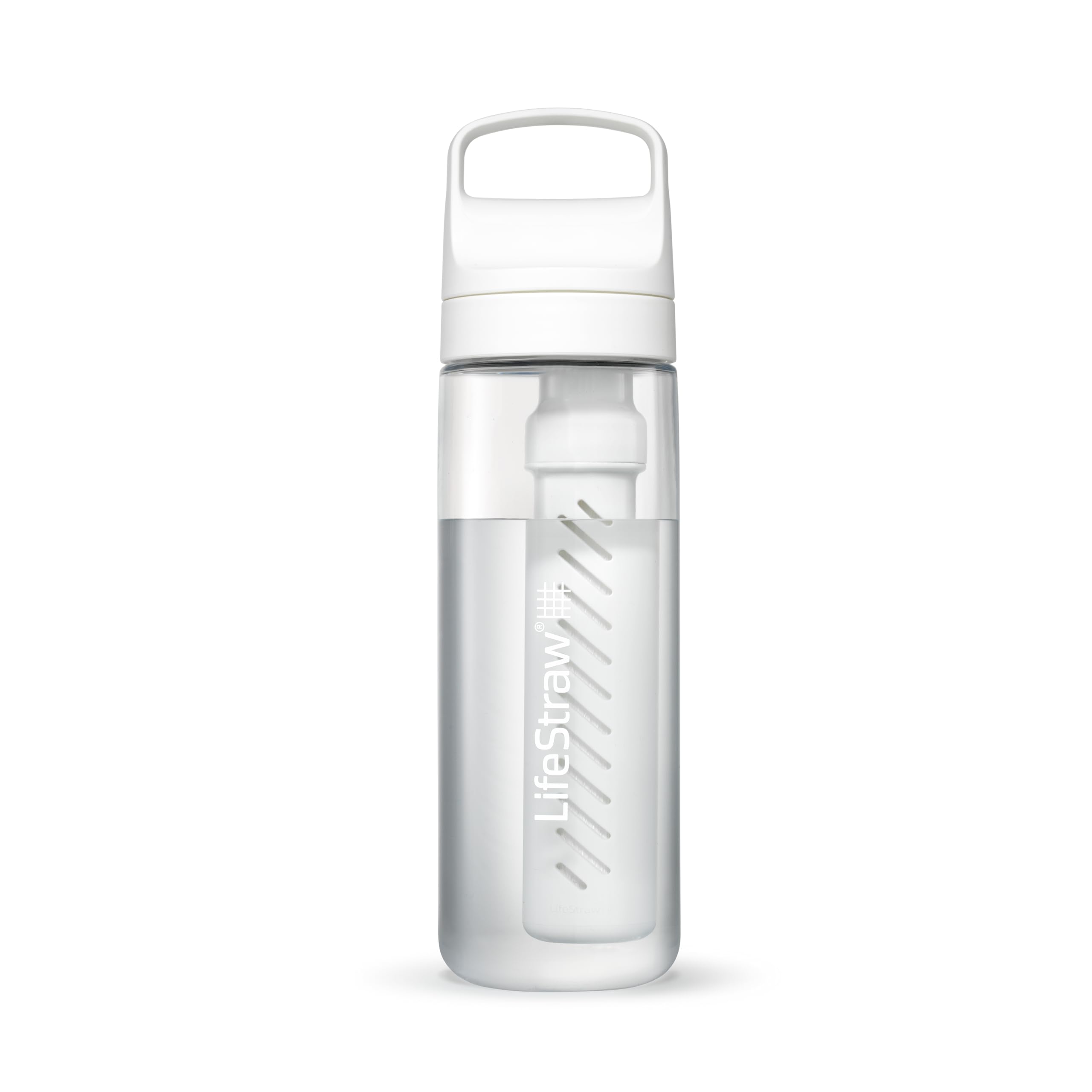
The LifeStraw Go is a genuine two-stage system — a membrane microfilter handles bacteria and parasites while a carbon stage handles taste and chlorine, which means it covers both treated and untreated water sources with one bottle. That dual capability makes it one of the more versatile filtered bottles available at this price point, and it's the right call for anyone who travels to regions where tap water safety is inconsistent. It does everything the Brita does for taste, plus adds meaningful biological protection that the Brita simply can't offer. The filter resistance and straw drip are present here too, as with any filtered bottle, and it's worth noting the membrane filter has a lower gallon rating than the carbon stage, so you'll be replacing components at different intervals.
A good fit if you travel internationally or visit places where tap water quality is genuinely uncertain and you want one bottle that handles both taste and biological protection.
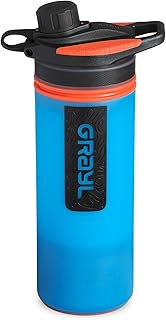
The GeoPress has earned its reputation as the go-to purifier for serious backcountry and expedition use — the press-style design filters a full bottle in about eight seconds, which is dramatically faster than squeeze or straw systems, and the polycarbonate body is built to take real abuse. The cartridge supply chain has proven durable through over a decade of production, and the bottle itself has been documented in continuous use by expedition guides who replace filters but keep the same body for years. At $100 it's a significant investment for a water bottle, but the combination of speed, purification level, and body longevity justifies the price for anyone who depends on it regularly in the field. The weight is higher than ultralight alternatives, which is the main reason dedicated ounce-counters look elsewhere.
A good fit if you spend serious time in the backcountry or expedition settings where fast, reliable purification from any water source is non-negotiable.

The Sawyer Squeeze has one of the strongest long-term ownership cases in the filtered water category — the hollow-fiber filter is rated for 100,000 gallons, third-party and OEM replacements are widely available, and the modular design means you can attach it to almost any compatible soft bottle or use it inline with a gravity system as your needs evolve. Ultralight backpackers consistently gravitate toward it because you can strip the kit down to the filter, a soft pouch, and a syringe for backflushing and keep total weight under four ounces. The squeeze effort required to push water through becomes genuinely fatiguing when you're filtering large volumes solo, which is why groups often convert it into a gravity drip setup. It doesn't improve taste the way a carbon filter does, but the longevity, repairability, and adaptability are hard to beat for backcountry use.
A good fit if you backpack regularly and want a filter system that can adapt to different setups over years of use without being locked into a proprietary bottle or cartridge.

The LARQ PureVis combines UV-C purification with a carbon filter stage in a well-built stainless steel body, and it's designed around the premise that you'll own it for a decade rather than replace it in two years. The UV element neutralizes bacteria and viruses without any filter medium to replace, which is a real convenience advantage over membrane systems for everyday use. The stainless body is genuinely durable and holds up far better than plastic under years of UV exposure and daily washing. The main vulnerabilities are battery dependence — a dead charge means you lose the purification benefit — and the premium price, which requires confidence that the UV module supply chain will remain supported. Early owner sentiment is positive on build quality but the lower review volume compared to established alternatives means long-term field data is still accumulating.
A good fit if you want a premium, long-term daily carry bottle with pathogen protection and are willing to manage battery charging as part of your routine.

This combination is built around a simple insight: the bottle should outlast the filter by a wide margin, so start with the most durable bottle you can get and add filtration as a swappable cap. Klean Kanteen's stainless steel construction is well-documented for surviving years of hard daily use — denting before cracking, holding up through dishwashers, and resisting odor absorption that eventually plagues plastic. The carbon filter cap retrofit handles chlorine and taste for treated tap water, and when the filter is spent you replace only the cap, not the bottle. Review volume on this specific pairing is thin, so it hasn't accumulated the long-term field data of more established systems, but the underlying modularity logic is sound for someone who wants an everyday bottle built to genuinely last.
A good fit if you want a stainless bottle you'll use for years and prefer the flexibility of swapping filter caps rather than being locked into a proprietary integrated system.

The Aquamira bottle is the most affordable option in this category and handles basic carbon filtration adequately for treated tap water, with filter cartridges available through major outdoor retailers. At under $12 it's a low-stakes entry point, but the thin review base and modest community enthusiasm suggest it doesn't inspire the long-term loyalty that the better-supported systems do. Outdoor community discussion around the Aquamira brand more broadly tends to center on their chemical treatment drops rather than the bottle, which hints at where the brand's real expertise lies. It's a serviceable option if budget is the primary constraint, but the durability and filter supply longevity don't generate the same confidence as pricier alternatives.
A good fit if you need a basic filtered bottle for occasional use and budget is the primary constraint, and you're not planning on it being a long-term daily carry.
How to choose
The first thing to nail down is what you actually need to filter. Carbon filters handle chlorine and taste — they're perfect for treated municipal water but do nothing against bacteria or protozoa. Hollow-fiber membrane filters catch bacteria and parasites, making them the right tool for international travel or backcountry water sources. UV purification kills pathogens without a physical filter medium but requires a charged battery and doesn't remove particulates or improve taste on its own. Most people drinking office or gym tap water need nothing more than carbon. If you're traveling to places with untreated or semi-treated water, you need a membrane filter at minimum.
Filter longevity and replacement availability are where a lot of these systems fall apart over time. A bottle rated for 40 gallons per filter cartridge sounds reasonable until you realize that's roughly two months of daily use — and if the manufacturer discontinues the product or the cartridge becomes hard to source, you're left with an expensive plastic vessel. Before committing, verify that replacement filters are available through multiple retailers and that the manufacturer has a track record of supporting their products. Modular systems that use standard threading or accept third-party filters give you more insurance against supply chain problems five or ten years out.
Bottle construction matters more than most people expect. Standard plastic degrades under UV exposure and repeated washing — you'll notice discoloration, odor absorption, and structural fatigue within a few years of heavy use. Stainless steel bodies outlast their filters by a wide margin, which is why pairing a durable bottle with a replaceable filter cap is a sensible long-term strategy. If you're buying something you want to use for a decade, the bottle body deserves as much consideration as the filter itself.
For outdoor and backcountry use, weight and flow rate become critical variables. Squeeze-style hollow-fiber filters add minimal weight and can handle high volumes across a long trip, but they require physical effort to push water through — something that becomes a real consideration when filtering ten or more liters a day. Press-style purifiers like plunger designs are faster and more convenient but heavier. UV bottles are the fastest to use but battery dependence is a genuine vulnerability in remote settings. There's no universally right answer; it comes down to how much weight you're willing to carry versus how much convenience you're willing to trade away.
Things worth knowing
- → Carbon filters meaningfully improve the taste of chlorinated tap water but provide zero protection against bacteria or parasites — if your water is already treated, that's usually all you need, but it's a real gap if you ever fill from an uncertain source.
- → Hollow-fiber membrane filters offer genuine biological protection against bacteria and protozoa without batteries or chemicals, but they add resistance to the draw and require periodic backflushing to maintain flow rate over time.
- → Stainless steel bottle bodies outlast plastic by years under real-world UV exposure and repeated washing, which matters a lot when you're pairing a durable vessel with a replaceable filter — the bottle should never be the thing that fails first.
- → Modular systems where the filter is a separate, swappable component give you meaningful insurance against manufacturer discontinuation, since you can adapt third-party or compatible filters when original cartridges become unavailable.
- → UV purification is the fastest and most effective method against pathogens but introduces battery dependency — a dead charge in a remote location turns your premium purifier into an ordinary insulated bottle.