Slim Wallets
Best Slim Wallets
A slim wallet is one of those purchases that sounds simple until you start pulling the thread — leather versus synthetics, card capacity versus actual minimalism, RFID protection versus added bulk. The wallet you carry every day for the next decade is worth thinking about for more than five minutes, because the wrong call means either a wallet that falls apart or one you quietly stop using because it doesn't actually fit your life.
Quick picks
- If you Want a proven leather bifold that ages beautifully without a premium price→Fossil Ryan RFID Mini Bifold
- If you Want the most durable non-leather wallet money can buy→Slimfold Micro Soft Shell Wallet
- If you Want the most minimalist card case in full-grain leather→Leatherology Slim Card Case
- If you Want something genuinely slim and almost indestructible on a tight budget→Mighty Wallet
- If you Want reliable RFID blocking in a leather bifold with good brand support→Bellroy Hide & Seek RFID
- If you Want a leather wallet with RFID protection without spending over $45→Herschel Edward RFID
Quick comparison
| Wallet | Price | Material | RFID | Tier |
|---|---|---|---|---|
| Leatherology Thin Bifold Wallet | $90 | Leather | No | Mid-range |
| Slimfold Micro Soft Shell Wallet | $57 | Nylon | No | Mid-range |
| Dun Wallet | $75 | Leather | Yes | Mid-range |
| Allett Sport Wallet Leather Edition | $62 | Leather | Yes | Mid-range |
| Mighty Wallet | $30 | Tyvek | No | Budget |
| Leatherology Slim Card Case | $65 | Leather | No | Mid-range |
| Herschel Charlie Wallet | $30 | Nylon | Yes | Budget |
| Herschel Edward RFID | $40 | Leather | Yes | Budget |
All options

Leatherology's Thin Bifold is a well-constructed option at the upper-mid price point, offering six card slots and a bill compartment in a package that stays genuinely slim. The leather is quality, and the design is clean without being fussy — it carries the kind of understated presence that works in both professional and casual contexts. It lacks the community track record of some longer-tenured brands, which makes it harder to speak confidently about decade-long durability, but early owner sentiment is consistently positive. If you want a leather bifold that looks sharp out of the box and holds a practical number of cards without bulk, it's a solid choice.
A good fit if you want a refined leather bifold with room for six cards and prefer a polished aesthetic over the rugged BIFL look.

The SlimFold Micro in soft shell is one of the most compelling non-leather options in the slim wallet space, and real-world longevity backs up the claims — owners regularly report five-plus years of daily carry with no structural failure. The material, developed for the motorcycle industry, is waterproof, abrasion-resistant, and genuinely thinner than leather alternatives when loaded with cards. There's no elastic to stretch out, no stitching to fray in the usual ways, and no break-in period. The trade-off is purely aesthetic: it doesn't develop patina, and the color will fade over time — which reads as wear rather than character to leather-minded buyers.
A good fit if you want maximum durability and zero maintenance, and you're comfortable with a technical material instead of leather.

The DUN Wallet is a handmade European trifold built around a genuinely minimal carry philosophy — it holds two cards and has a central pocket with German-made RFID blocking foil. The top-grain calf leather and Dutch craftsmanship signal quality, and the handmade construction means it's more repairable than machine-stitched alternatives. The two-card capacity is the obvious conversation to have with yourself before buying: this is truly a one-ID, one-payment-card setup, and anything beyond that requires compromise. For the right person — someone who has genuinely whittled their carry down to the essentials — it's a beautifully considered object.
A good fit if you've committed to carrying two cards maximum and want a handcrafted leather trifold with built-in RFID protection.

Allett has been doing the slim horizontal wallet longer than most, and the Sport Leather Edition benefits from years of refinement — the silicone grip lining that holds cards in place is a practical detail that most competitors skip. The full-grain leather construction combined with high-performance nylon interior gives it a hybrid durability story, and the RFID blocking layer adds peace of mind without affecting the profile. Community members who've owned Allett wallets for ten to fifteen years speak to genuine longevity, which is a meaningful data point. The horizontal form factor takes mild adjustment if you're used to traditional bifolds, but most people adapt quickly.
A good fit if you want a slim, horizontal front-pocket leather wallet with RFID protection and a track record of lasting well over a decade.

The Mighty Wallet is the origami-folded Tyvek wallet that's been around since 2005, and its longevity as a product reflects something real about how well the material holds up. At under $30, it's an easy entry point for anyone skeptical about minimalist wallets who wants to try one without financial commitment — but owners regularly report carrying them for two-plus years with zero structural issues. It expands to fit more and contracts when you're carrying less, which sounds like marketing but actually works in practice. The Tyvek doesn't feel precious the way leather does, but it's nearly impossible to destroy through normal use.
A good fit if you want to test the minimalist wallet lifestyle without spending much, or you just want a nearly indestructible carry at the lowest price in the category.
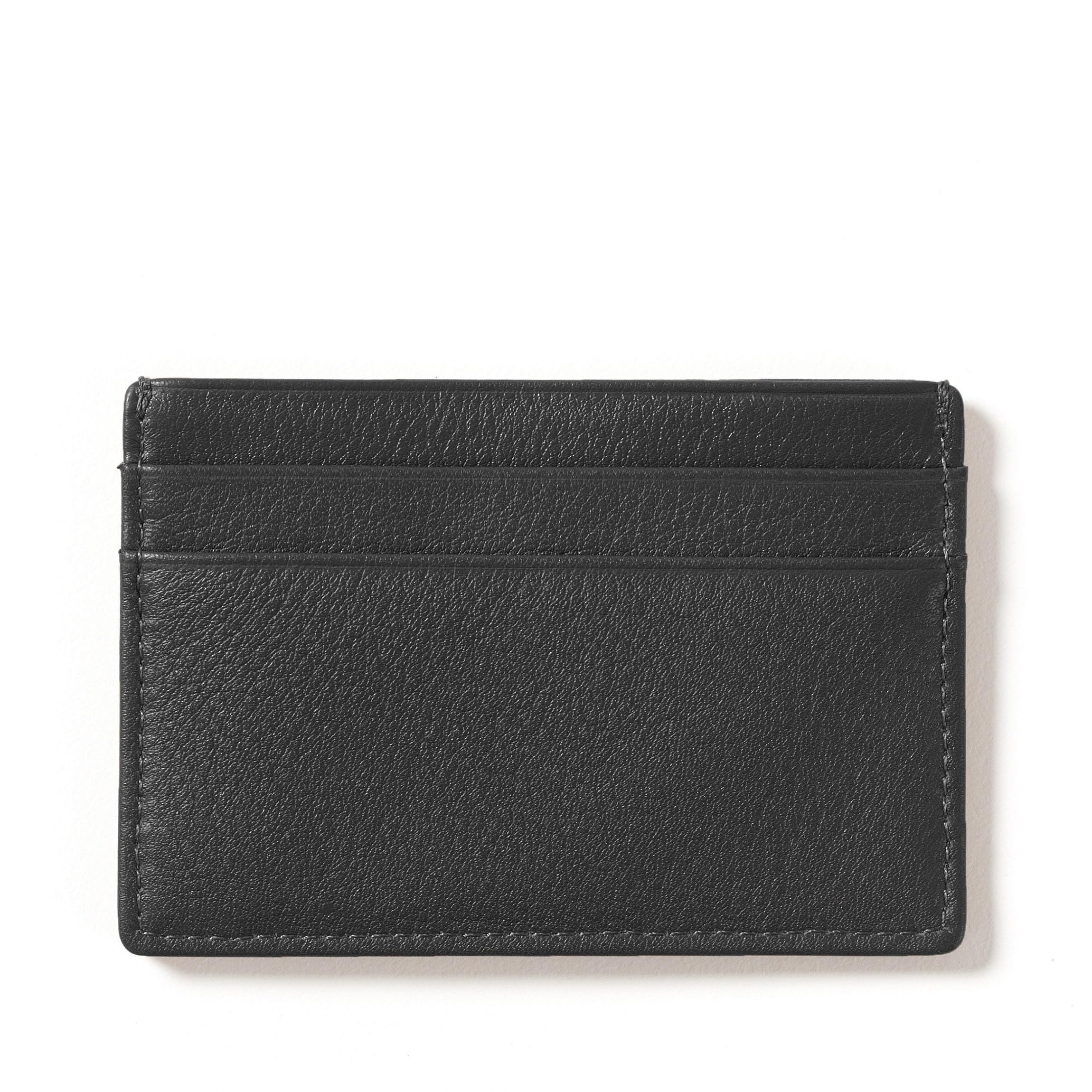
The Leatherology Slim Card Case makes a strong argument for going leather in the card-case format — it's crafted from vegetable-tanned full-grain German leather, which is a meaningful spec that puts it in the same sourcing conversation as far more expensive options. Four exterior card slots and a center bill pocket keep the profile at an almost absurdly slim 0.125 inches empty. Vegetable tanning produces leather that ages with more character than chrome-tanned alternatives, and the patina on a wallet like this can be genuinely beautiful after a few years. The trade-off is that vegetable-tanned leather needs more conditioning and is more sensitive to water early in its life.
A good fit if you want the slimmest possible leather card case and appreciate that vegetable-tanned full-grain leather will develop a rich, individual patina over time.

The Herschel Charlie is a fabric bifold built from recycled polyester with RFID blocking built in, and it hits a price point that's hard to argue with for what you get. It won't develop any patina or age with the character of leather, but recycled polyester at a high weave density is genuinely tough and easy to care for. The RFID layer is a nice inclusion at this price. It's more of a practical daily carry than a considered BIFL purchase — Herschel makes solid everyday products without pretending to be an heirloom brand, and the Charlie fits that honest positioning.
A good fit if you want a no-fuss fabric wallet with RFID protection at the lowest price in the category and don't care about leather aging.

The Herschel Edward delivers genuine leather at a sub-$45 price point with RFID blocking included, which makes it a legitimate contender for buyers who want natural material aging without premium pricing. Herschel isn't a heritage leather brand, but their leather goods consistently earn strong marks for fit, finish, and durability at this price tier. It won't have the craft story of a European or American handmade wallet, but the leather is real and will age accordingly. For someone stepping up from fabric or Tyvek for the first time and not ready to commit to a $90 wallet, it's a sensible bridge.
A good fit if you want genuine leather with RFID blocking and are working with a sub-$45 budget without wanting to compromise on material quality.
How to choose
The first decision is material, and it's more philosophical than practical. Full-grain leather — especially from respected tanneries — will outlast almost anything else if you maintain it, and it develops a patina that makes it genuinely more attractive over time. That aging process is a feature in the buy-it-for-life world, not a flaw. But leather requires some care, doesn't love moisture, and takes time to break in. If that sounds like a chore rather than a pleasure, modern synthetics like Tyvek and ballistic nylon offer impressive durability without any of that upkeep — they just won't look better at year five the way a good leather wallet will.
Card capacity is the other big variable, and it's worth being honest with yourself here. Most slim wallets are designed around four to six cards, which is genuinely enough for most people once you audit what you're actually carrying. If you regularly carry eight or more cards, you're either looking at a wallet that will stretch and deform quickly, or you need to accept something slightly thicker. The wallets that promise to hold ten-plus cards while staying paper-thin are usually making that trade-off somewhere — often in durability or how the wallet looks after six months of real use.
RFID blocking is worth having, but don't let it be the deciding factor on its own. The threat is real but modest, and well-implemented RFID shielding adds essentially no bulk to a modern slim design. What matters more is how the shielding is integrated — thin foil layers built into the structure are far better than a separate sleeve that adds thickness. If a wallet you'd otherwise love happens to include RFID blocking, great. If you're choosing a worse wallet just to get it, that's not the right trade.
Finally, pay attention to construction details that predict longevity: hand-stitching is easier to repair than machine stitching, brass or stainless hardware will outlast cheap zinc alloy snaps, and brands that offer repair services are signaling something real about how they stand behind their products. A $90 wallet from a brand that will resole it in year three might be a better long-term value than a $30 wallet you'll replace twice.
Things worth knowing
- → Full-grain leather will outlast synthetics with care and develop a unique patina over years of use — but if you're not willing to condition it occasionally and keep it away from prolonged moisture, that longevity promise starts to hollow out.
- → Tyvek and technical synthetics are genuinely tough and require zero maintenance, but they age differently than leather — fading and texture changes rather than a rich patina, which some buyers see as a downgrade and others simply don't care about.
- → Bifold wallets with bill compartments are more versatile for cash carriers, but card-only cases are dramatically slimmer and better suited to people who almost always pay digitally and just want their physical cards organized.
- → RFID blocking is worth having when it's built into the wallet's structure without adding bulk, but it's not a meaningful differentiator on its own — don't let it override what actually matters, which is how the wallet is built and whether it will last.
- → Brand repair policies matter more than they seem: a wallet from a company that will fix or replace it in year four is a fundamentally different value proposition than one from a brand that treats every purchase as final.