Men's Boots
Best Men's Boots
A good pair of boots should outlast trends, careers, and maybe even your address — but only if you buy the right kind. The gap between a boot that lasts three years and one that lasts thirty often comes down to a single question: can it be resoled? That answer determines everything about how you should spend your money here.
Quick picks
- If you Want the definitive BIFL heritage boot→Alden Indy Boot (405)
- If you Want resolable quality without heirloom pricing→Thursday Boot Company Captain Boot
- If you Want a rugged everyday boot with serious cult credibility→Red Wing Classic Moc
- If you Want handmade American craftsmanship and a lifetime rebuild commitment→Nicks Boots Explorer Boot
- If you Want a grab-and-go Chelsea boot that handles real weather→Blundstone Men’s Originals #500
- If you Want an heirloom-grade boot and money is no object→August Special Belliver Boot
Quick comparison
| Boot | Price | Construction | Resolable | Origin | Tier |
|---|---|---|---|---|---|
| Clarks Desert Boot | $140 | Cement | No | Imported | Budget |
| Morjas The Chukka Boot | — | — | — | Imported | Premium |
| Timberland Men's Redwood Falls Waterproof Moc-Toe Boot | $118 | Cement | No | Imported | Budget |
| Red Wing Classic Moc | $258 | Goodyear welt | Yes | Made in USA | Mid-range |
| Dr. Martens 2976 Yellow Stitch Smooth Leather Chelsea Boots | $147 | Cement | No | Imported | Budget |
| Dr. Martens 1460 Yellow Stitch Smooth Leather Boots | $149 | Cement | No | Imported | Budget |
| Blundstone Men’s Originals #500 | $200 | Cement | No | Imported | Mid-range |
| Oak Street Bootmakers Trench Boot | — | Goodyear welt | Yes | Made in USA | Premium |
| August Special Belliver Boot | — | Goodyear welt | Yes | Imported | Heirloom |
| Thursday Boot Company Captain Boot | $199 | Goodyear welt | Yes | Imported | Mid-range |
| Chippewa 1939 Original Service Boot | $200 | Goodyear welt | Yes | Made in USA | Mid-range |
| Alden Indy Boot (405) | $395-$450 | Goodyear welt | Yes | Made in USA | Heirloom |
| Viberg Service Boot | $530-$650 | Goodyear welt | Yes | Imported | Heirloom |
| Nicks Boots Explorer Boot | $450-$550 | Goodyear welt | Yes | Made in USA | Heirloom |
| White's Boots Smoke Jumper | $380-$450 | Goodyear welt | Yes | Made in USA | Heirloom |
All options

The Clarks Desert Boot is essentially the canonical chukka — it invented the modern template in 1949 and still executes it well at an accessible price. The soft leather and crepe sole make it comfortable nearly from day one, which is genuinely rare at this price. The tradeoff is longevity: cemented construction means you're not resoling these, and the crepe sole, while wonderfully cushioned, does wear down. Owners who use them as a daily casual rotation shoe report years of service; those expecting a 20-year companion will be disappointed.
A good fit if you want an iconic, comfortable casual boot at an honest price and you understand you're buying a refined consumable, not a lifetime tool.
Morjas makes a sharper, dressier chukka than the Clarks — handcrafted in Spain with a cleaner silhouette that pushes into suit-appropriate territory while still reading as casual with denim. The suede finish and refined last give it a distinctly elevated look that most boots at any price don't achieve. The narrow toe box is a real consideration worth sizing carefully for, and the limited colorway selection keeps this firmly in the dressed-up lane. If you want one pair that bridges smart-casual and business-casual convincingly, few chukkas do it better.
A good fit if you're a loafer person who wants the versatility of an ankle boot and cares more about refined aesthetics than workwear durability.
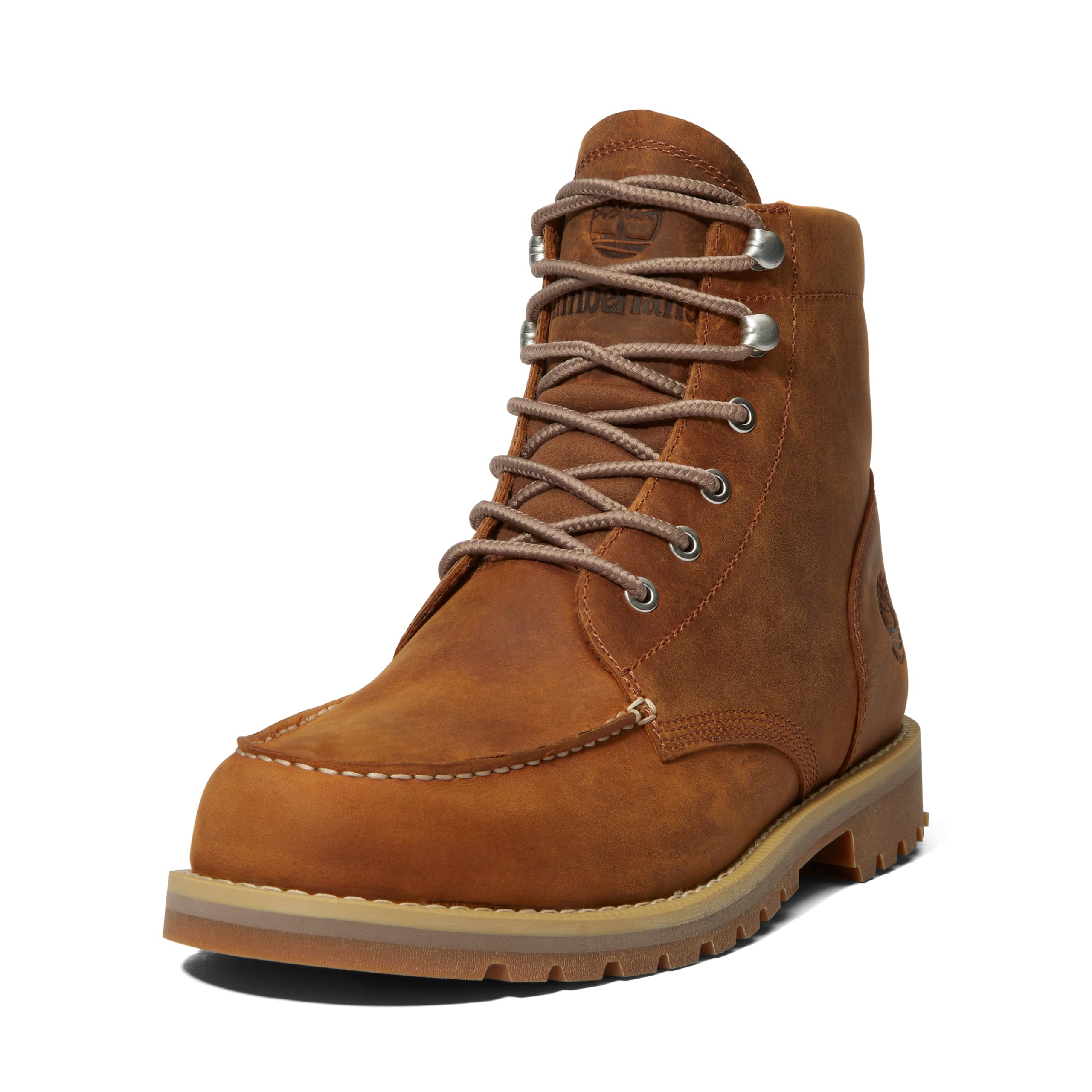
The Redwood Falls is not the iconic yellow Timberland, but it's arguably more useful — waterproof, surprisingly lightweight, grippy outsole, and available in wide widths. At under $120 it punches above its price tier for pure wearability and weather resistance. What it isn't is a resolable boot; cemented construction means a finite lifespan no matter how well you treat it. Treat this as a genuinely capable everyday work-adjacent boot rather than a heritage purchase and you won't be disappointed.
A good fit if you need a waterproof, comfortable boot for demanding daily use and you'd rather replace it in a few years than invest more upfront.

The Red Wing 875 is one of those rare products that earned its cultural moment through genuine quality rather than marketing — introduced in 1950 for farmers and hunters, it's now ubiquitous precisely because it works. The Oro Legacy leather is tough, weathers beautifully, and conditions into something special over years of wear. It's heavy, runs a full size large, and demands a real break-in period — all of which are signs of a boot built for the long haul rather than instant comfort. Red Wing's resoling infrastructure is solid, and these can be rebuilt multiple times.
A good fit if you want a proven, resolvable heritage boot with a strong BIFL track record and you don't mind putting in the break-in time.

The 2976 is the Chelsea version of the classic Doc Martens DNA — same air-cushioned sole, yellow stitching, and pull-tab detail, but in a slip-on silhouette that's faster to put on and slightly dressier in profile. The Nappa leather is noticeably softer than the standard smooth leather used on lace-up Docs, which shortens the break-in period. These are not a resolable boot in the heritage sense, but they're durable enough to last years with reasonable care and are one of the most recognizable silhouettes in footwear. If you want the Docs look in Chelsea format, this is the cleanest execution of it.
A good fit if you want the instant visual recognition of Dr. Martens in a slip-on format and you're buying for style and durability rather than lifetime repairability.

The 1460 is the boot that made Dr. Martens — eight eyelets, yellow stitching, thick air-cushioned sole, and a silhouette that's been going strong since 1960. It's genuinely durable for the price and has a proven track record spanning decades of daily wear across multiple subcultures. The heat-sealed construction is not resolable in the traditional sense, but the sole bond is robust and the upper leather holds up well with basic care. The ubiquity is real — in certain cities and certain crowds you will see these everywhere — but there's a reason for that.
A good fit if you want a proven, affordable boot with decades of cultural credibility and you care more about longevity-for-the-price than resolability.
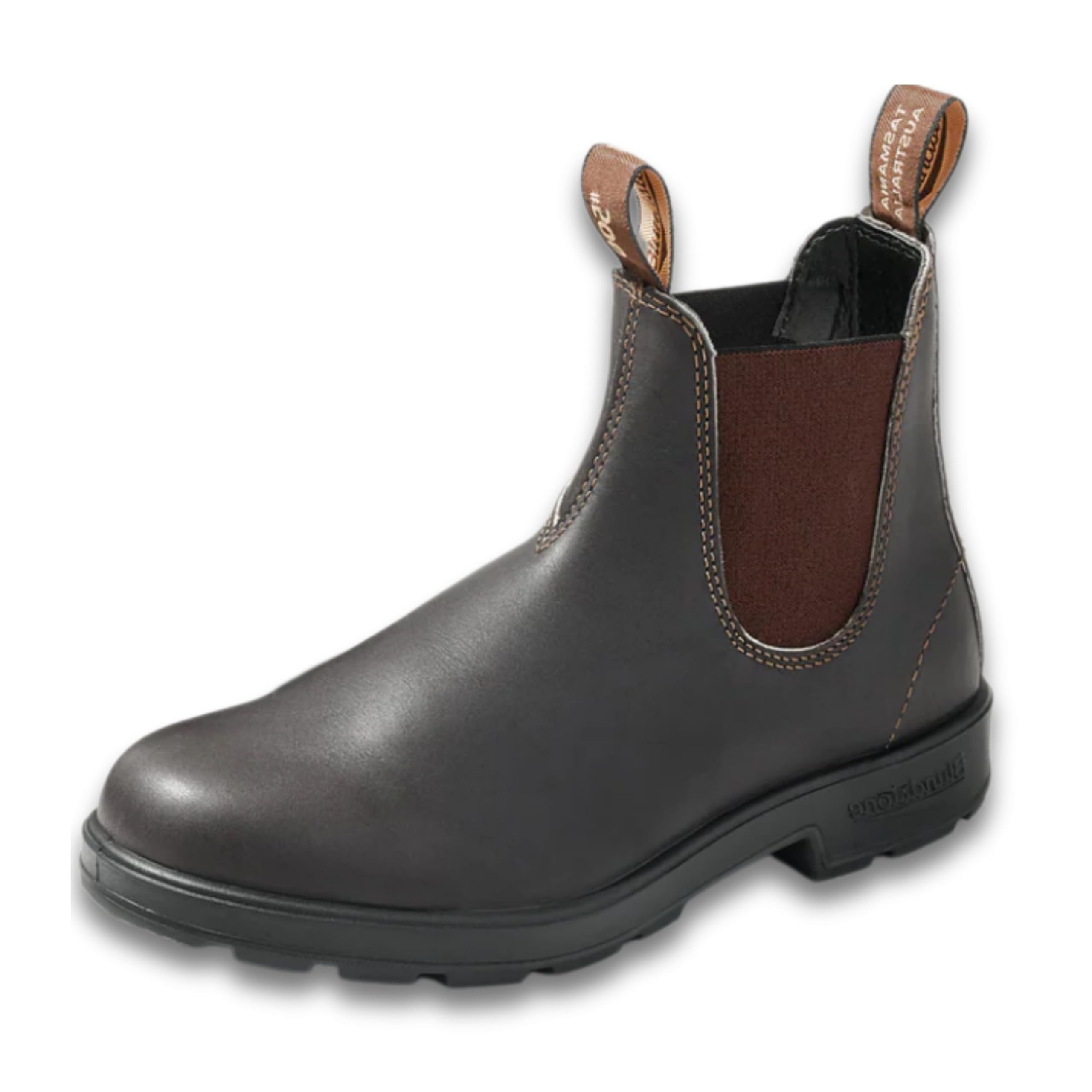
Blundstones are the rare boot that justifies their reputation — genuinely comfortable, genuinely durable, and genuinely versatile across seasons and settings. The water-resistant leather holds up in serious winter conditions, the cushioned TPU sole absorbs real mileage, and the Chelsea silhouette means they're on and off in seconds. Breathability is the honest limitation; they run warm in summer. The resolability question puts them in the mid-tier rather than the BIFL tier, but owners consistently report multi-year daily wear before any serious degradation.
A good fit if you want a no-fuss, all-conditions Chelsea boot that you can wear every day without thinking about it.
Oak Street's Trench Boot is what happens when a cobbler's son designs a serious lace-up boot — the construction is deliberate, the leather is specially tanned for a balance of toughness and suppleness, and the military-inspired silhouette manages to read as sophisticated rather than costume-y. These can be resoled and rebuilt repeatedly, which is the real value proposition at this price. The heavy, confident weight is either a feature or a drawback depending on your preferences; testers describe it as a boot that makes its presence known. Limited size availability at the top end is worth checking before you commit.
A good fit if you want a refined, resolvable lace-up boot with genuine craft heritage and a silhouette that works from field to formal.
How to choose
The most important thing to understand before buying boots is the difference between resolable and non-resolable construction. Goodyear welt and stitchdown boots can be taken apart, rebuilt, and put back together by a cobbler — sometimes dozens of times over decades. Cemented or glued constructions cannot. At the sub-$150 price point, nearly everything you find is cement construction, which means you're buying a consumable, not an investment. That's fine if you know what you're getting, but don't expect a $130 boot to become a 20-year companion.
Leather quality is the second major variable. Full-grain leather — especially hides from well-regarded tanneries — develops a patina over time, conforms to your foot, and responds well to conditioning. Corrected-grain leather, which has been sanded and coated to hide imperfections, looks uniform at first but doesn't age as gracefully and is harder to restore. If a manufacturer doesn't specify the leather type or tannery, that usually tells you something. Brands that are proud of their materials tend to say so.
Before committing to a premium resolable boot, take a honest look at your local cobbler situation. A $400 Goodyear-welted boot is only a lifetime boot if someone can resole it when the time comes. In major cities this is rarely an issue, but in smaller markets you may need to ship boots out — which adds cost and inconvenience. Factor that into your calculus. Some manufacturers also offer factory rebuilds, which is worth knowing before you buy.
Break-in period is real and shouldn't be mistaken for poor fit. Quality boots — especially those made on traditional lasts with stiff full-grain leather — often feel uncomfortable for the first several weeks of wear. This is normal and expected. A boot that's comfortable on day one but uses soft corrected leather and a foam midsole may feel better early but won't hold up the same way. Give a quality boot 4 to 8 weeks before judging it.
Things worth knowing
- → Goodyear welt construction is the dividing line between a boot you replace and a boot you rebuild — if resolability matters to you long-term, it's worth paying into that tier even if the upfront cost stings.
- → Heritage American and Canadian brands carry the highest confidence for true longevity, but they also carry premium prices; the value question is whether you'd rather buy once at $350 or twice at $150 over the same decade.
- → Full-grain leather from a reputable tannery will look better at year ten than it did at year one, while corrected-grain leather tends to degrade in ways that can't be reversed with conditioning — a real difference if you're thinking in decades.
- → Chelsea and chukka styles offer convenience and versatility but are harder to find in serious resolable constructions at accessible prices, while lace-up work and service boot silhouettes dominate the heritage tier.
- → The break-in calculus matters: a boot that's stiff and uncomfortable for six weeks is often one that has genuinely structured support and lasting shape retention, while immediate comfort sometimes signals materials that will compress and wear out faster.